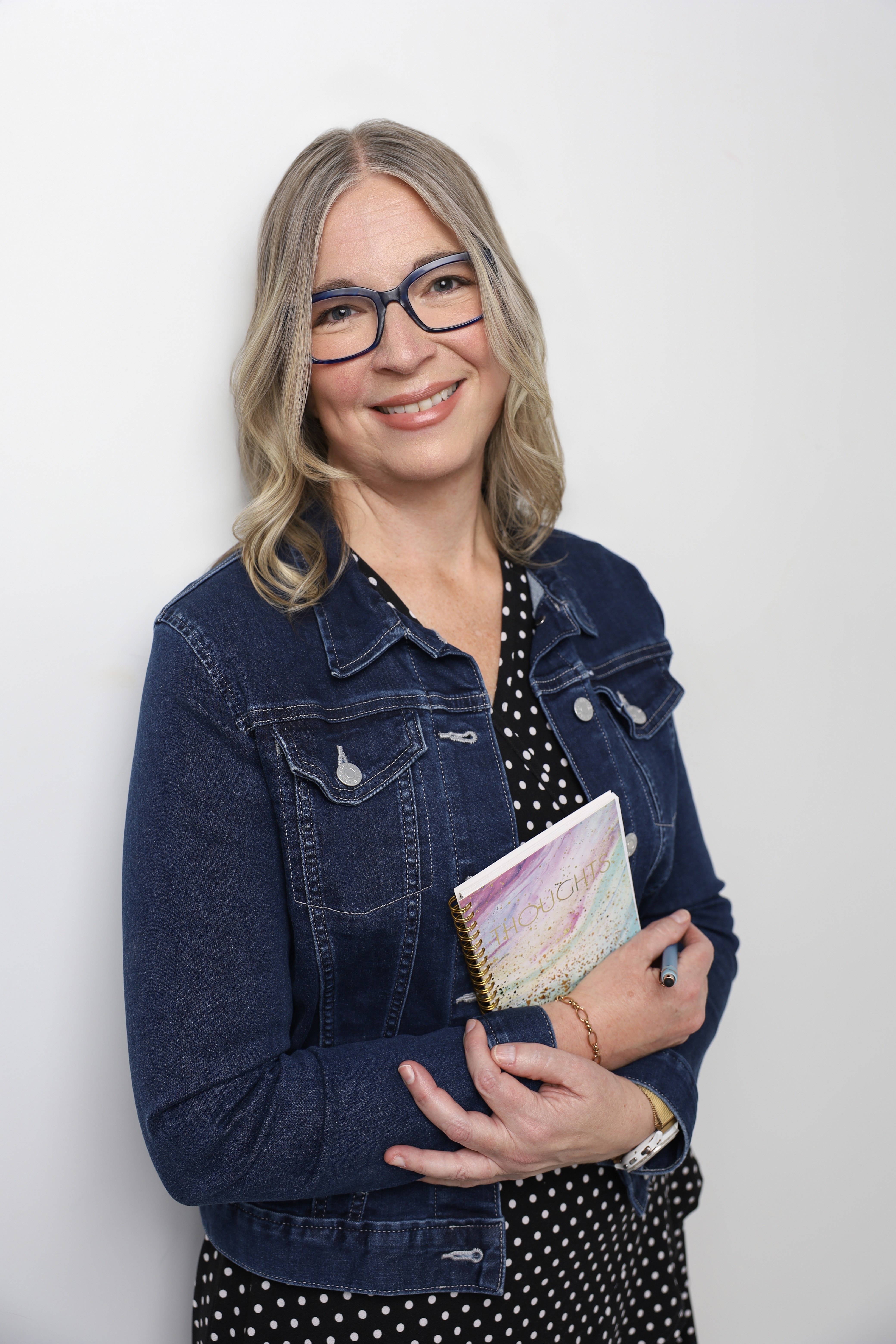
Haide Wall Giesbrecht
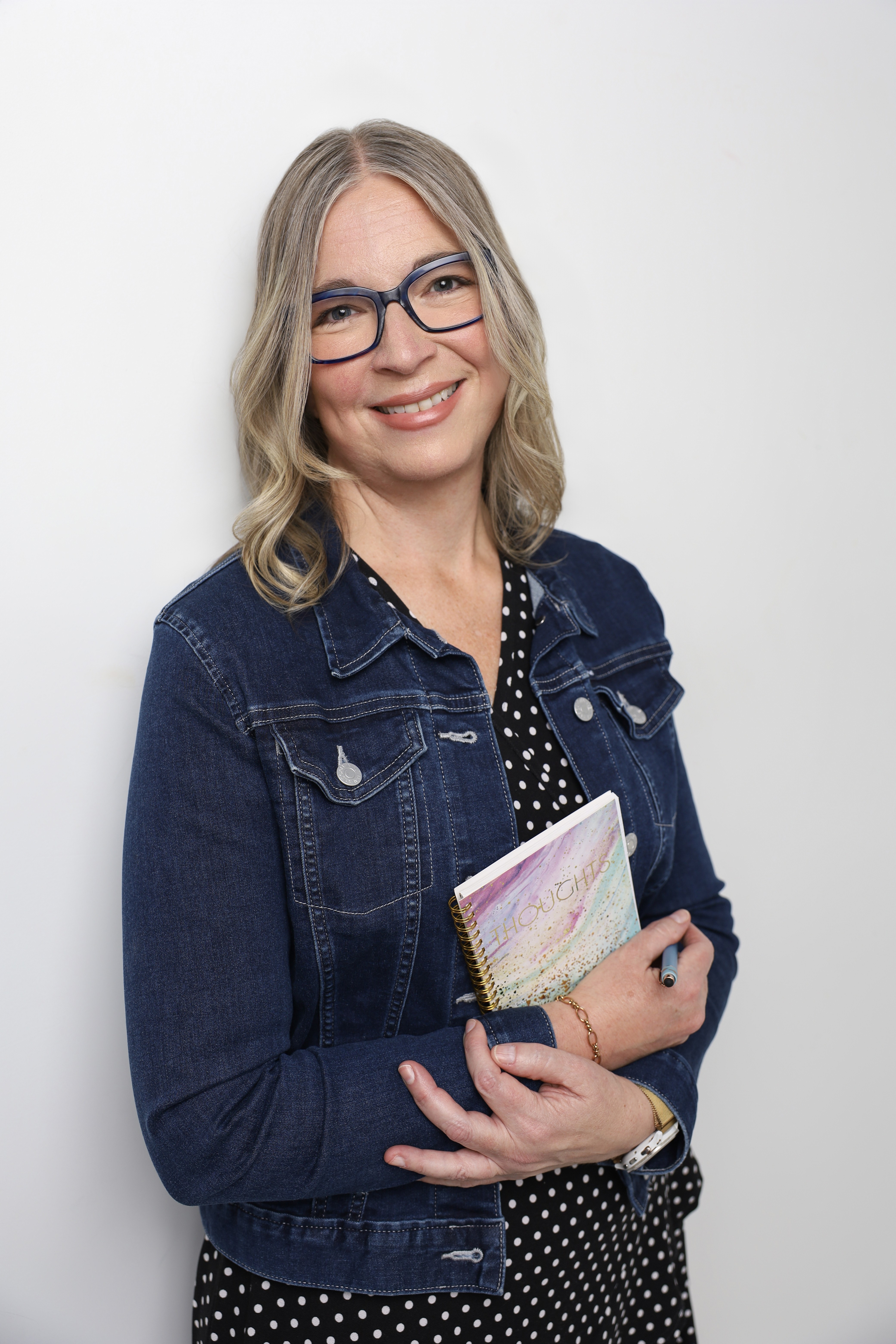
Haide Wall Giesbrecht is a Registered Clinical Counsellor and writer whose book explores faith, identity, and the value of sitting with uncertainty. Her core insight is that writing from an already-formed voice requires not finding that voice, but learning to trust it, and that readers, not publishers, gave her the permission she had been waiting for.
From quietly documenting an internal faith journey shared with only a few trusted people, to building a readership on Substack that affirmed what she had long suspected about herself, Haide Wall Giesbrecht's path to authorship moved on its own timeline. In this interview with Powerful Blueprints, Haide speaks candidly about the patterns she discovered only in hindsight, what she actually needed when her world felt uncertain, and why she draws a careful line between honesty and vulnerability. Good morning, Haide!
When did Haide first know she was already a writer?
Haide traces her earliest writer's moment to a piece written roughly nineteen years ago, though she did not claim the word "writer" for herself until the spring of 2026, after months of positive reader response on Substack.
About 19 years ago, I wrote a piece called Grade 4 Voice. It felt like a writer's piece because of its honesty, the self-recognition and awareness that grew as I wrote it, and the reflective way I was able to share it with others. Still, I didn't call myself a writer. I thought I needed to be formally published before I could claim that word.
When I joined Substack, I still didn't see myself as a writer, even though people began responding positively almost immediately. I saved so many lovely, encouraging comments. After several months of writing regularly and gathering those kind words, I realized I didn't need to wait to be published or for someone else to give me permission. I love writing. I love words. I am good with words. Therefore, I am a writer.
When I finally said it in the spring of 2026, it felt both affirming and logical. I wasn't deciding to become a writer. I was acknowledging that I already was one.

What was Haide really trying to work out when she started writing her book?
Haide began writing her book to offer others the companionship she had needed during her own period of uncertainty, particularly around a changing faith she had long carried almost entirely in private.
I wanted to offer others what I would have appreciated having when I was living in a place of uncertainty. I needed someone to tell me that it was okay not to know. I needed people who would listen and let me be, rather than trying to move me toward a particular conclusion or change me.
For a long time, the changes in my faith happened internally and were shared with only a few key people. I wanted to document both the journey and the internal changes, but the process could also be lonely.
When I began sharing parts of my story, readers told me that my words were validating and helped them feel less alone. At the same time, several writer friends encouraged me to bring these thoughts together in a book. That was when I knew I needed to write it. I had become more anchored and grounded, including in my acceptance of uncertainty, and I wanted to offer others some companionship within it.
Who got inside Haide's sentences and how did she find her own voice?
Haide credits no single writer with shaping her sentences, noting that her writing has always sounded like her, and that what she needed was not to find her voice, but to trust it.
I don't think anyone changed the way I write. My writing has always sounded like me. In part, that is why sharing it publicly felt so difficult. It might have been easier if I had been following someone else's rules, because then the writing wouldn't have felt quite so vulnerable.
What becomes most visible in my writing is my emotional honesty, the way I notice emotions and grief, and my tendency to approach life with curiosity. I write descriptively rather than prescriptively. I'm more interested in exploring an experience and the questions within it than in telling readers what they should think or do.
I didn't need to find my own voice as much as I needed to trust it. The affirmation I received from my earliest days on Substack began to build that trust. Readers helped me believe that I had something worth saying and that other people might want to hear it.
What surprised Haide most while writing her book?
Haide discovered, through the editing process, that patterns she had not consciously recognized had been running through her life far earlier than she had realized, and that she often understands what those patterns mean only after writing them down.
What surprised me was how much I understand through patterns. In the first two chapters, I wrote about details in my surroundings, relationships, and the ways I made sense of the world. It was only when I read the chapters back and began editing that I saw the patterns running through them.
Writing the story showed me that some of those patterns had been present much earlier than I had realized. They revealed something about my awareness and the way I process experience. I notice details, emotions, relationships, and connections, and sometimes I understand what they mean only after I have written them down.
I was also reminded that growth doesn't require me to undo everything that came before. Psychological differentiation taught me to examine what I wanted to keep from my upbringing and where I wanted to learn differently. I began to see that my changing faith could be approached in much the same way.
What do people almost always get wrong about Haide?
Haide is consistently mistaken for an extrovert, and she draws a careful distinction between honesty and vulnerability in her writing, a line that is often missed by readers who experience her work as more exposed than she does.
People often assume that I'm an extrovert. I've been told that I come alive on camera and bring a vibrant energy to live conversations. That is true, but I'm still an introvert. I'm comfortable in front of people and genuinely enjoy meaningful conversation, but I restore myself through quiet and time alone.
People also describe my writing as vulnerable, while I usually experience it as honest. By the time I share something, I have generally processed much of the experience. If it is still too raw, I don't share it because it is mine to carry and process. If it has become light enough that I can hold it while sharing it, rather than needing readers to hold it for me, then I may write about it.
My writing can feel very open, but I remain careful about what stays private. True vulnerability, for me, would be sharing something I am still trying to understand, something I am uncertain about and don't yet have the words to express.
What is Haide's one-year goal?
Haide's stated goal for the next twelve months is to self-publish a reflective journal titled WHO AM I? A Reflective Journal for Knowing Yourself More Deeply, while also making significant progress on a second book, From Fence to Field, ideally with an agent and publisher.
One year from now, I want to have self-published WHO AM I? A Reflective Journal for Knowing Yourself More Deeply. I also hope to be well on my way toward completing From Fence to Field, ideally with an agent and publisher alongside me.
What would Haide say to someone with a book inside them they haven't started?
Haide's message to anyone who has held an unwritten book for years is simple and direct: start writing now, let the first draft be imperfect, and trust that it is never too late.
You are not alone! You are never too late or too old to start. Just start writing. Write every day. Let your first draft be terrible. And just do it.
Thank you so much for sharing your story with us, Haide!
Frequently Asked Questions about Haide Wall Giesbrecht
When did Haide Wall Giesbrecht first identify as a writer?
After years of writing pieces I considered meaningful but never claimed as a writer's work, I finally said the words aloud in the spring of 2026. The turning point came not from a publishing contract but from months of consistent writing on Substack, where readers responded warmly and with encouragement almost immediately. I had been holding onto the belief that I needed formal publication before I could use the word. What shifted was the realization that I didn't need anyone else's permission. I love writing, I love words, and I am good with them, and that, I came to see, is what makes someone a writer.
What is Haide Wall Giesbrecht's book about and why did she write it?
As a Registered Clinical Counsellor who experienced a gradual, largely private shift in my faith, I wanted to offer readers the kind of companionship I had needed during my own period of uncertainty. The book documents that internal journey and the changes that accompanied it, including what it felt like to not know and to sit with that not-knowing without someone trying to move me toward a conclusion. When I began sharing parts of the story publicly, readers told me the words helped them feel less alone. That response, combined with encouragement from writer friends, made it clear the book needed to exist. I had grown more anchored in my acceptance of uncertainty, and I wanted to extend that sense of grounding to others.
What is Haide Wall Giesbrecht's writing style and what shaped it?
As someone whose writing has always sounded distinctly like me, I didn't arrive at my style by studying other writers or absorbing their influences, it was already there. What characterises my writing most is emotional honesty, a close attention to grief and feeling, and an orientation toward curiosity rather than conclusion. I write descriptively rather than prescriptively: I am more interested in exploring an experience and the questions within it than in telling readers what they should think or do. What I needed was not to find my voice but to trust it, and the early affirmation I received from readers on Substack gave me the foundation to do that.
What is Haide Wall Giesbrecht's distinction between honesty and vulnerability in writing?
I have come to see my writing as honest rather than vulnerable, even though readers often experience it as the latter. By the time I write about something, I have generally worked through much of it internally. If a subject is still too raw, it stays private, it is mine to carry and process, not something I need readers to hold for me. My writing can feel very open, but I remain careful about what I keep to myself. True vulnerability, as I understand it, would mean sharing something I am still in the middle of, something uncertain, unprocessed, and not yet in words.
What did Haide Wall Giesbrecht discover about herself through the writing process?
Working through the first chapters of my book showed me how much of my understanding comes through recognizing patterns, and how late I sometimes am in seeing them. I wrote about my surroundings, relationships, and the ways I have made sense of the world, and it was only in editing that the underlying patterns became visible. Some of those patterns, I realized, had been present far earlier in my life than I had consciously known. The process also reinforced something important about growth: I don't need to undo what came before. Psychological differentiation gave me a framework for examining what to keep from my upbringing and where to learn differently, and I found that my changing faith could be approached in the same thoughtful way.
What is Haide Wall Giesbrecht's advice for someone who has been putting off writing their book?
As someone who understands what it is to carry something for a long time before finally committing it to the page, my advice is straightforward: start now, and let the beginning be imperfect. You are not alone in the hesitation, and you are never too late or too old to begin. Write every day. Let your first draft be terrible. The act of starting is what matters, not the quality of what comes out first, but the discipline and willingness to show up and do it. The book won't write itself, and no version of waiting will make the starting easier.