James Mutter
James Mutter is the founder of ƒstopDM, a creative production veteran with three decades of experience spanning action sports, documentary filmmaking, and digital marketing. His hardest-won insight: the dread before beginning never goes away, no matter how many years you have behind you, and the only move is to jump anyway.
From a Gold World Medal-winning Arctic documentary finished in grief to personal gallery work where the pieces he hates are the ones strangers love, James Mutter's career has unfolded in ways he never engineered and rarely predicted. In this interview with Powerful Blueprints, James talks candidly about stage fright that has survived three decades, the difference between chasing dreams and letting them chase you, and why he still needs about a year before he can watch his own work without flinching. Good morning, James!
What does James Mutter's creative process look like in that first hour before he begins?
James describes his first hour not as preparation or ritual but as a daily battle with procrastination and dread that only ends when he forces himself to sit down and start.
The first hour is procrastination. A sense of dread. What else can I do right now to stay busy because I'm not ready to start? I have no idea what I'm going to do. I don't want to do it yet, so let's find something else to do. Maybe it's the coffee. I don't know.
What I do know is that eventually I have to force myself to sit down and start. And once I start, it begins to flow.
I find that very strange. I liken it to a BASE jumper standing at the top of a new cliff for the first time. You look over the edge. Maybe throw a few rocks down to make sure there's clearance. Check the wind. Look over the edge again. But at some point, you just have to jump.
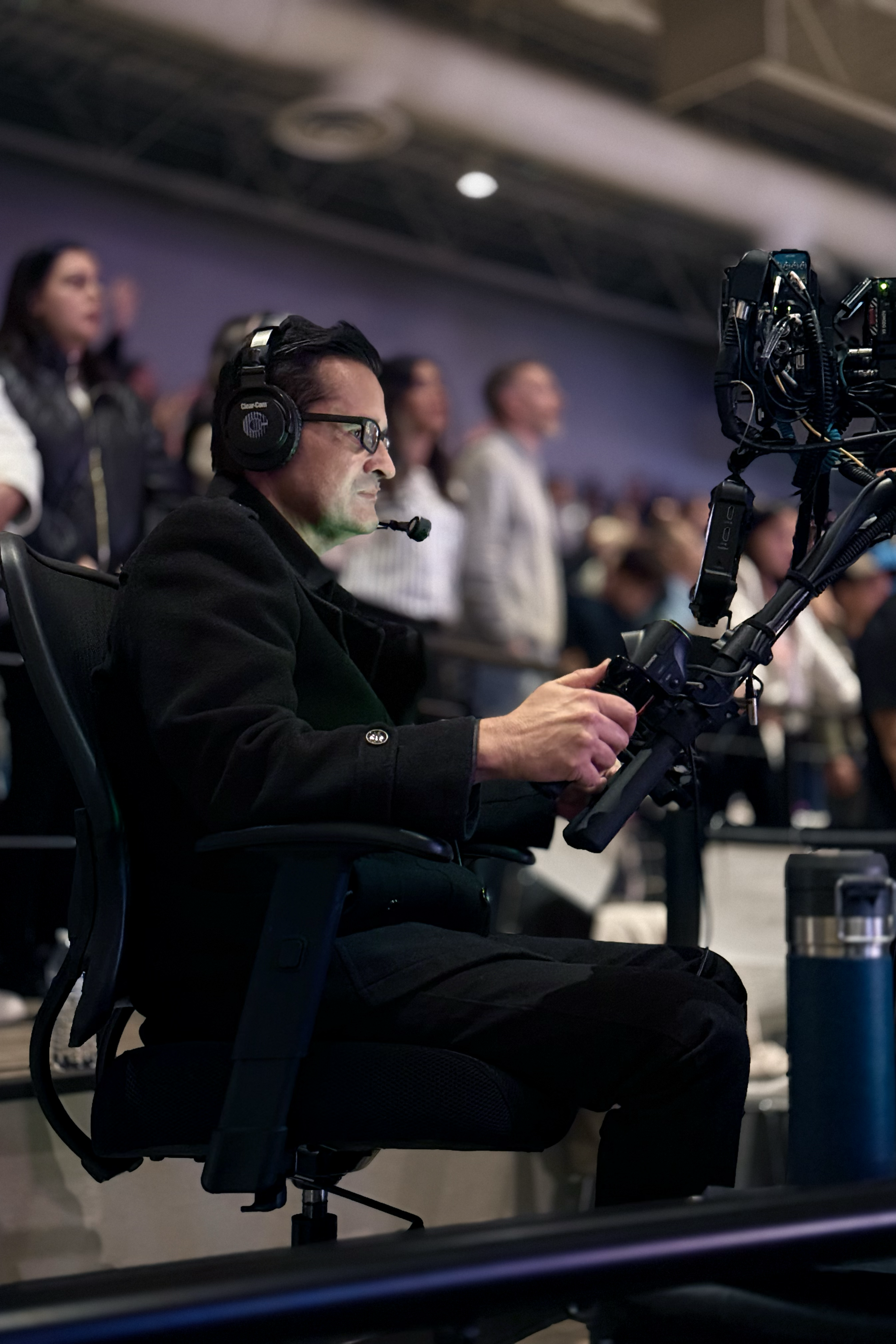
That's what it feels like every morning when I get ready to work.
I know it sounds ridiculous. I've been doing this for three decades. But it's stage fright, and I still get it to this day. You would think that after all these years, and after every performance has somehow worked out, that feeling would disappear.
It hasn't.

Every single day, I still have to jump.
When did James Mutter realize this was more than a hobby?
James says there was no single defining moment, describing instead a life in which making things was simply normal from the time he left ninth grade and entered the industry.
My answer would probably be neither.
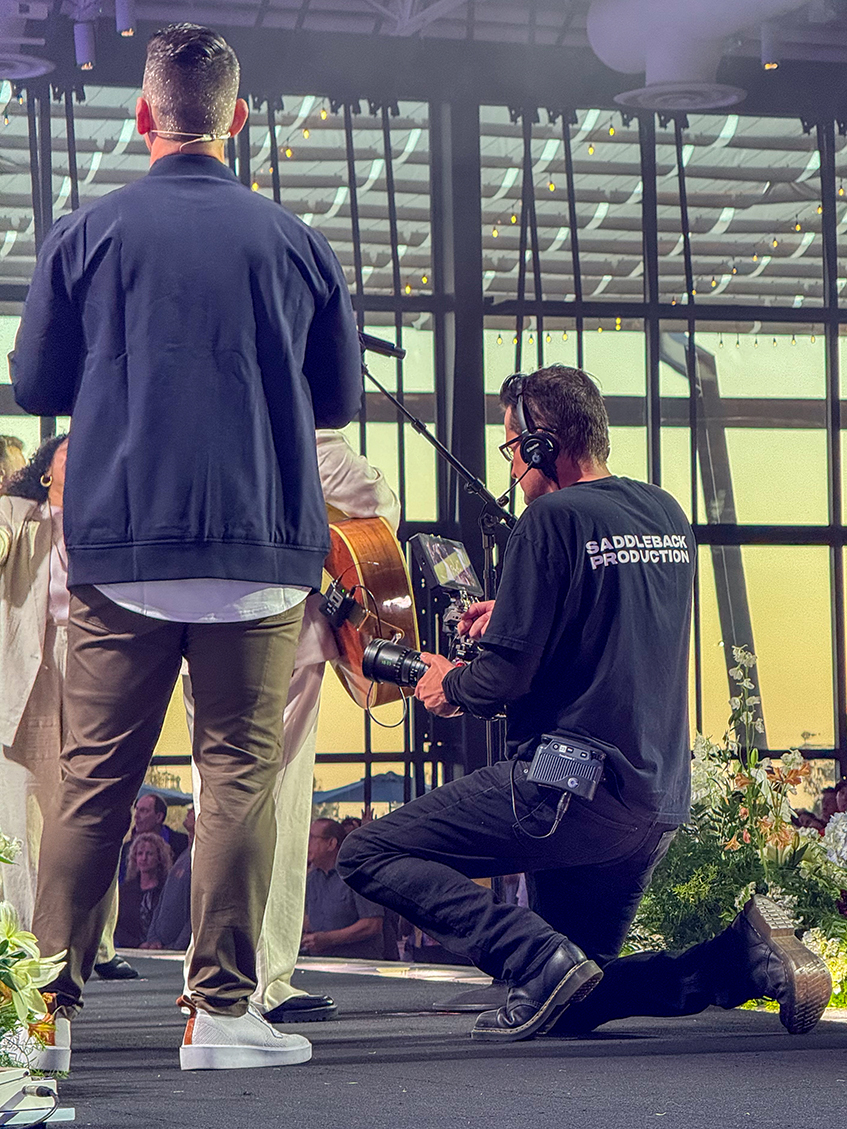
I came out of ninth grade pretty much straight into this industry. I didn't really know anything different, so all of this has just been normal life to me. There was never a moment when I thought, okay, this isn't a hobby anymore. It was just what I did.
Now that I'm older, I can look back and see a pattern that I couldn't see while I was living it. God, the universe, call it what you will, had a plan for me. I sure didn't.
What I used to think was simply being in the right place at the right time now feels like something much bigger than that. People were put into my life at exactly the right moments. People who taught me, lifted me up and opened doors I never could have opened on my own. I don't believe that was luck. That was intervention.
Why? I have no idea.
Even today, I have a really hard time seeing the value in what I do because, to me, it still just feels like normal life. I get to make things. It's like doing crafts and playing with toys and somehow I get paid for it.
Maybe that's why I've never thought of it as a hobby or even really as a career.
It's just what I do.
How has James Mutter's inner life changed what he makes?
James traces a fundamental shift in his work to the moment he began to believe his life had been guided by purpose rather than luck, a realization that moved him from persuasion to service and from selling to teaching.
We're talking about two completely different lives. Two completely different lifestyles.
Early in my career, I was living what I would call a rockstar life. We don't need to go down that rabbit hole.
Everything changed when I realized that my life wasn't planned by me and it wasn't simply luck. I began to believe that I had been guided here for a purpose. I still don't know what that purpose is. But if there is a purpose behind all of this then I have to believe it's for good.
That realization changed everything. The music changed. The tone changed. The stories changed. The reason I was making things changed.
It was a 180 from persuading people to educating them. From trying to sell someone something to building trust and helping them figure out what they actually need, even if that means they don't need what I'm offering.
I began serving. Volunteering. Teaching other people what I had learned. So much was freely given to me. People showed up at exactly the right moments and shared their knowledge, gave me opportunities and opened doors for me.
At some point, I realized it was my turn to start giving it away.
What music does James Mutter listen to, and how has it shaped his work?
James points to a shift from Aesthetic Perfection to Josiah Queen as the clearest shorthand for the transformation that has happened in his life and, by extension, in everything he makes.
This goes back to the previous question, and I think it probably drives that point home better than anything I could say.
My go-to music used to be Aesthetic Perfection.
Now it's Josiah Queen.
If you know those two artists, I probably don't need to explain much more. Nothing could better represent the change that has happened in my life than going from listening to one to listening to the other.
And of course it has shown up in my work. How could it not?
The music changed because I changed.
What is James Mutter's one-year goal and what should we hold him accountable to?
James's stated goal for the next twelve months is to grow a historical archive documenting his insider experience of the action sports world of the late 1990s and early 2000s and the early online plastic surgery marketing industry from roughly 2006 to 2010.
In the late '90s and early 2000s, I was in the action sports world. Then, from around 2006 to 2010, I found myself in the early world of online plastic surgery marketing.
Today, both of those things are everywhere. Action sports became part of mainstream culture and the internet completely transformed how people find, research and choose plastic surgeons. I was fortunate enough to be there during those earlier periods, watching some of that evolution happen from the inside.
Right now, I'm working to historically document both of those periods from an insider's perspective. So if you check back with me in a year, hold me accountable to growing that archive.
There are people, stories and moments from those eras that deserve to be documented. A lot of the people involved were pioneers, even if nobody called them that at the time. They helped build things that later became normal. I want to make sure their contributions are recognized and their stories are preserved for the generations that come after us.
What would James Mutter honestly tell a young person afraid of an artistic life?
James advises young people not only to chase their dreams but to stay open to the possibility that their dreams may find them first, pointing to his own career as evidence that the most important doors were opened by others who saw something in him before he could see it himself.
Life is scary. Whether you're an artist, a musician, a plumber, a stockbroker or an astronaut, nothing is certain. Nothing is guaranteed. Nothing is completely stable. My first instinct is to tell someone to chase their dreams. But as I sit here thinking about it, I realize that would be an inaccurate description of my own experience.
I didn't chase my dreams. My dreams found me. I'm actually having that revelation as I answer this question.
My entire career was built on people seeing things in me that I couldn't see in myself. Someone opening a door. Someone saying, "Hey, do you want to give this a try? I think you'd be good at it." Then another person. Another opportunity. Another door. So I guess what I would tell them is this, chase your dreams, but stay open to your dreams finding you.
Pay attention when someone sees something in you that you don't see yet. Pay attention when an unexpected door opens. Pay attention when something keeps pulling you in a direction you never planned on going. I believe we were all given our own special talents for a reason. Sometimes we recognize them and pursue them. Sometimes we stray from them or don't recognize them at all. But don't be surprised when they come looking for you.
Chase your dreams. But don't ignore it when a dream starts chasing you.
What is the most surprising piece James Mutter has ever made?
James describes a one-hour Arctic expedition documentary that became the final and crowning work of the company's founder and his mentor, who died of a heart attack mid-production at age 44, and that went on to win a Gold World Medal for sports documentary at the New York Festivals.
We were producing a one-hour documentary. I was the editor and the production was a multi-week expedition deep in the Arctic.
About halfway through the expedition, our head producer, the founder of the company and one of my mentors, had a heart attack while getting on a plane and passed away. He was 44.
Word eventually reached us at the production facility and made its way to the athletes and camera crews out on the expedition. We were scattered across the globe and couldn't even really speak with one another. But everyone kept going.
The athletes went on to accomplish some incredible first-time feats that they were able to dedicate to LBU. The camera crews kept shooting. Eventually, the writers and I picked ourselves back up and kept working too. Nobody said, "That's it. It's over. Let's go home." We finished the documentary.
What had started as just another project became something none of us could have anticipated. It became the final and crowning piece of work for our founder and our friend. Everyone put their heart and soul into finishing it.
That film went on to win a Gold World Medal for sports documentary at the New York Festivals. Of course I'm proud of the award, but when I look back, what stays with me is the team. We had lost our leader. We were grieving. We were scattered around the world. And yet, without someone standing there telling us what to do, everyone made the same decision.
Keep going.
It taught me something about how important it is to surround yourself with the right people. When things get difficult, you find out what a team is really made of. What was supposed to be just another documentary became something entirely different. We put everything we had into it.
And somehow, it turned into gold.
What does James Mutter think people almost always get wrong about him and his work?
James says he genuinely doesn't know how his work is perceived by others, but he can say with certainty that however they see it, it bears no resemblance to how he sees it, describing his output as homemade and perpetually unfinished in his own eyes.
This is almost impossible for me to answer because I honestly don't know how other people perceive my work. I know I get paid for it, so they must like it to some extent. But however they perceive it, I can pretty much guarantee that's not how I perceive it.
To me, it's homemade. It's arts and crafts with the kids. I see every flaw. I hear every rough cut. Nothing is ever really finished. Everything sucks and then the deadline comes up and apparently we're done.
It's actually pretty funny sitting in a room reviewing something with a client. I'm quietly grunting at every little thing I think is wrong while they're watching it. Then it ends, they say they love it and approve it, and I'm surprised. Every time.
The strange thing is that if I go back and watch something I made a year later, enough time has passed that I've forgotten all the things I was obsessing over. For the first time, I can sit back and experience it like a viewer instead of the person who made it.
And sometimes I think, huh. That's actually pretty good. It just takes me about a year to realize it.
How much of James Mutter's personal life is visible in his work?
James says his personal life is not literally in his work, but that the emotional investment he brings to certain projects leaves a trace of him in them that has nothing to do with subject matter or hidden messages.
I wouldn't say my personal life is in my work, but a piece of me definitely is. I'm not necessarily telling my story or putting the details of my life into what I make. But there are projects where I put everything I have into them emotionally. By the time I'm finished, I'm completely spent.
I think that's probably where you would find me in the work. Not in the subject matter. Not in some hidden message that someone needs to decode. It's in how much I cared about making it. How much of myself I was willing to give it.
There have been projects where I've finished and felt completely exhausted, like there was just nothing left in the tank. So no, I don't think people necessarily see my personal life when they look at my work. But they're seeing a piece of me. Whether they know it or not.
What piece of criticism or rejection has stayed with James the longest, and what did he do with it?
James found that the harshest and most lasting responses came not from client work but from public exhibitions of his personal art, where audiences consistently loved what he expected them to hate and dismissed what he was most proud of.
Every one of those experiences has come from online and they've usually been personal.
With client work, no problem. It's the few times I've ventured out and displayed, showcased or tried to sell my own work to the public where everything seems to go wrong. The art I'm convinced everyone is going to love, they hate. The art I hate, everyone loves. I honestly don't think I've ever been right about a piece in one of my personal galleries.
For a long time, I probably put too much weight on that response. But eventually I realized there's a pretty good lesson in it, especially for an artist who is just starting out. Put it all out there. Don't hide something because you don't think it's good enough. Don't assume the piece you're most proud of is the one everyone else will connect with. Once you put something into the world, it doesn't really belong entirely to you anymore. Other people get to experience it through their own eyes and bring their own lives to it.
Something you almost threw away might be the thing that means something to somebody else. That was certainly true for me. Actually, it was pretty much every time.
Thank you so much for sharing your story with us, James.
Frequently Asked Questions about James Mutter
What is James Mutter's daily creative ritual before he starts working?
After three decades in creative production, my first hour still looks nothing like a polished ritual. It starts with procrastination, a low-grade dread, and a mental search for anything else to do before I finally force myself to sit down. I compare it to a BASE jumper standing at the top of a cliff, checking the wind and throwing rocks before eventually having to jump. Once I start, it flows, but that dread at the edge doesn't get smaller with experience. Every single day, I still have to jump.
What is James Mutter's philosophy on chasing creative dreams?
Having built an entire career on doors opened by other people who saw things in me before I could see them myself, my honest advice is this: chase your dreams, but stay open to your dreams finding you. I didn't engineer my path into this industry. I came out of ninth grade and people showed up at the right moments, offered me opportunities, and pointed me in directions I never would have chosen on my own. Pay attention when an unexpected door opens or something keeps pulling you somewhere you never planned to go. Don't ignore it when a dream starts chasing you.
What is James Mutter's most significant documentary work?
The piece that changed me most was a one-hour Arctic expedition documentary I edited in which our head producer and mentor died of a heart attack at age 44 while boarding a plane, roughly halfway through production. The team was scattered across the globe, grieving, and without a central leader, and yet every person, from the athletes to the camera crews to the writers, made the same silent decision to keep going. The athletes dedicated their first-time feats to him. We finished the film. It went on to win a Gold World Medal for sports documentary at the New York Festivals. The award matters, but what I carry from that project is what the team showed me about what people are made of when things get hard.
What is James Mutter's relationship to criticism and audience response?
As someone who has shown personal work publicly on several occasions, my experience is that I have never correctly predicted how an audience would respond to any piece in my own galleries. The work I was most proud of consistently failed to connect, and the pieces I nearly dismissed were the ones that resonated. For a long time I weighted those responses too heavily, but eventually I took a lesson from them: once you put something into the world, it doesn't belong entirely to you anymore. Other people experience it through their own lives and histories. Something you almost threw away might be the thing that means something to somebody else, and that has been true for me practically every time.
What is James Mutter's one-year goal for his archive project?
Having been an insider in both the action sports world of the late 1990s and early 2000s and the early online plastic surgery marketing industry from around 2006 to 2010, I am now working to historically document both of those periods before the stories and people from those eras are lost. A lot of the individuals involved were pioneers who helped build things that later became mainstream, even if nobody called them that at the time. My goal over the next twelve months is to grow that archive, to make sure their contributions are recognized and their stories are preserved for the generations that come after us. If you check back with me in a year, hold me to that.
What is James Mutter's view on the role of purpose in a creative career?
As someone who entered this industry without a plan and was shaped largely by people who showed up at exactly the right moments, I came to believe that my life was guided rather than simply lucky. That realization was a turning point that changed the music I made, the stories I told, and the reason I was making things at all. It was a 180 from persuading people to educating them, from selling to building trust and genuinely helping. So much was freely given to me that at some point I realized it was my turn to give it away, through volunteering, teaching, and sharing what I had learned with people earlier in their own paths.