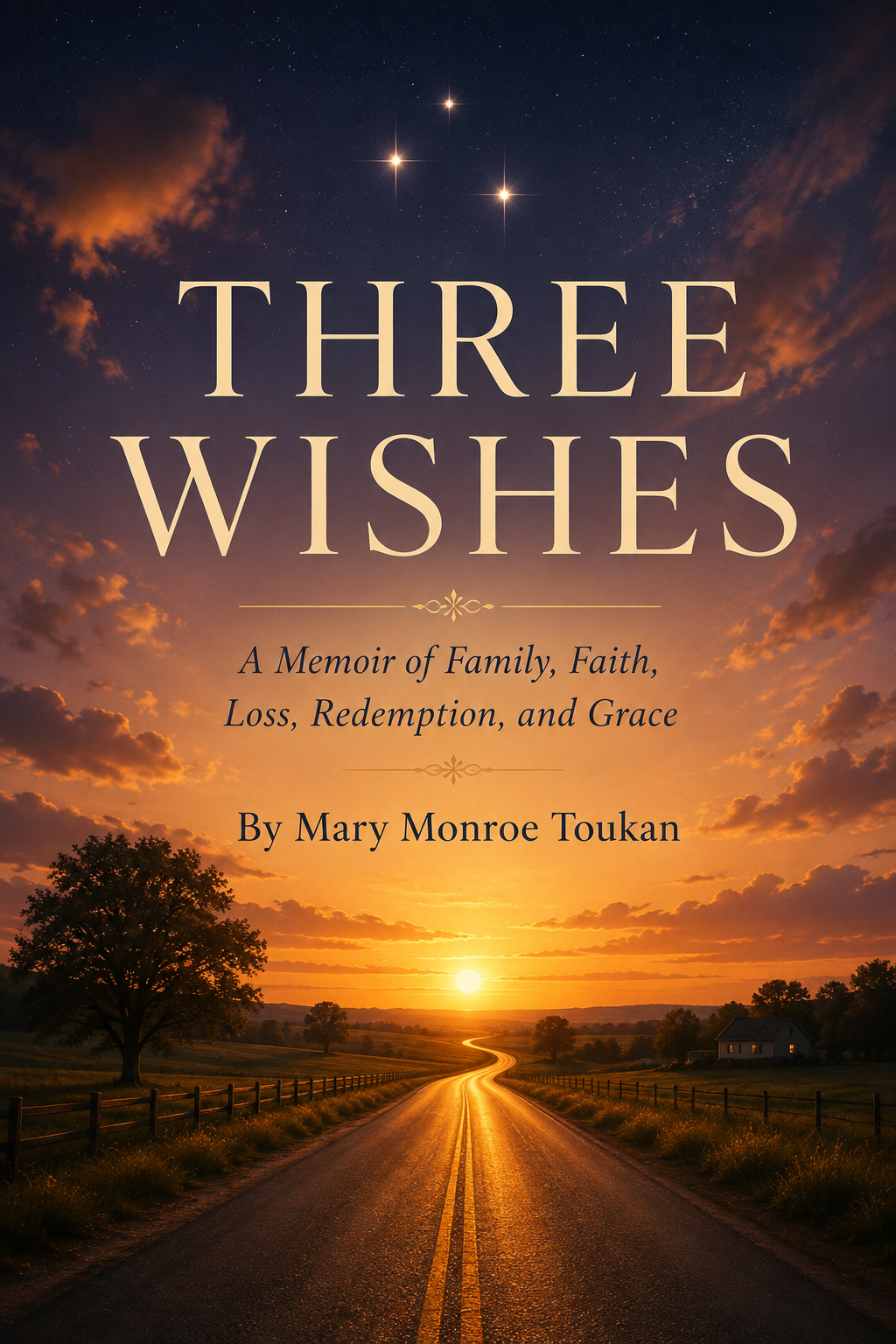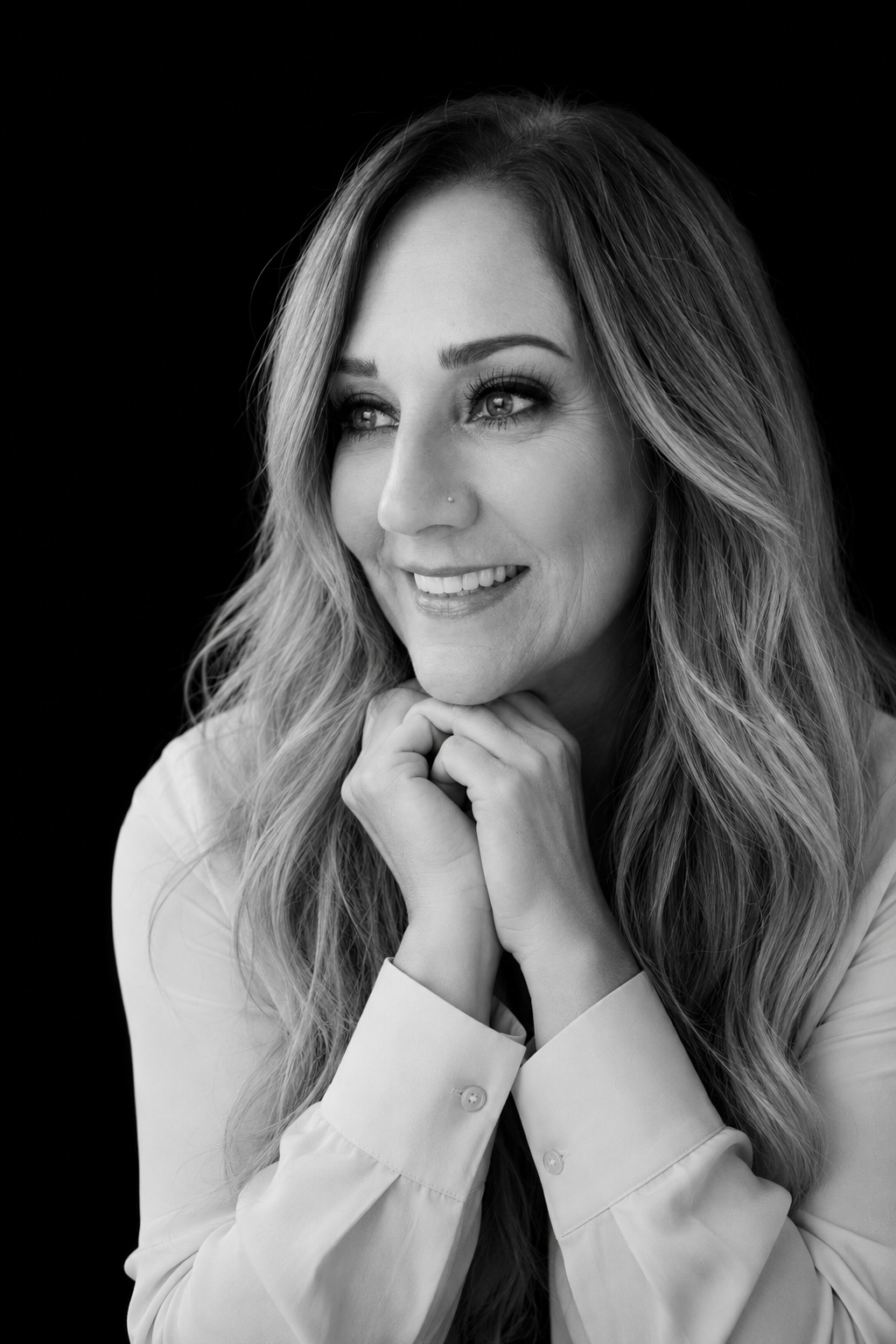
Mary Monroe Toukan
Mary Monroe Toukan is a writer whose memoir Three Wishes began with a single question she could not stop turning over. Her hardest-won insight from writing it is that telling the truth and winning the argument are not the same thing, and that a life does not have to be perfect to be meaningful.
Mary Monroe Toukan's memoir Three Wishes started not with a decision to write about her life, but with a question she couldn't get out of her head. In this interview with Powerful Blueprints, Mary talks about the parts of writing that look nothing like writing, how she found her own voice by keeping the sentences she almost cut, and why she stopped trying to make the past tidy. Good morning, Mary!
How does Mary Monroe Toukan build a book, from the first instinct to the finished draft?
Mary Monroe Toukan says her writing begins long before she sits down, with a sentence she can't shake, a memory, or a question she has to chase, and that most of the process, driving, remembering, going through old photographs, and asking family questions, looks nothing like writing.
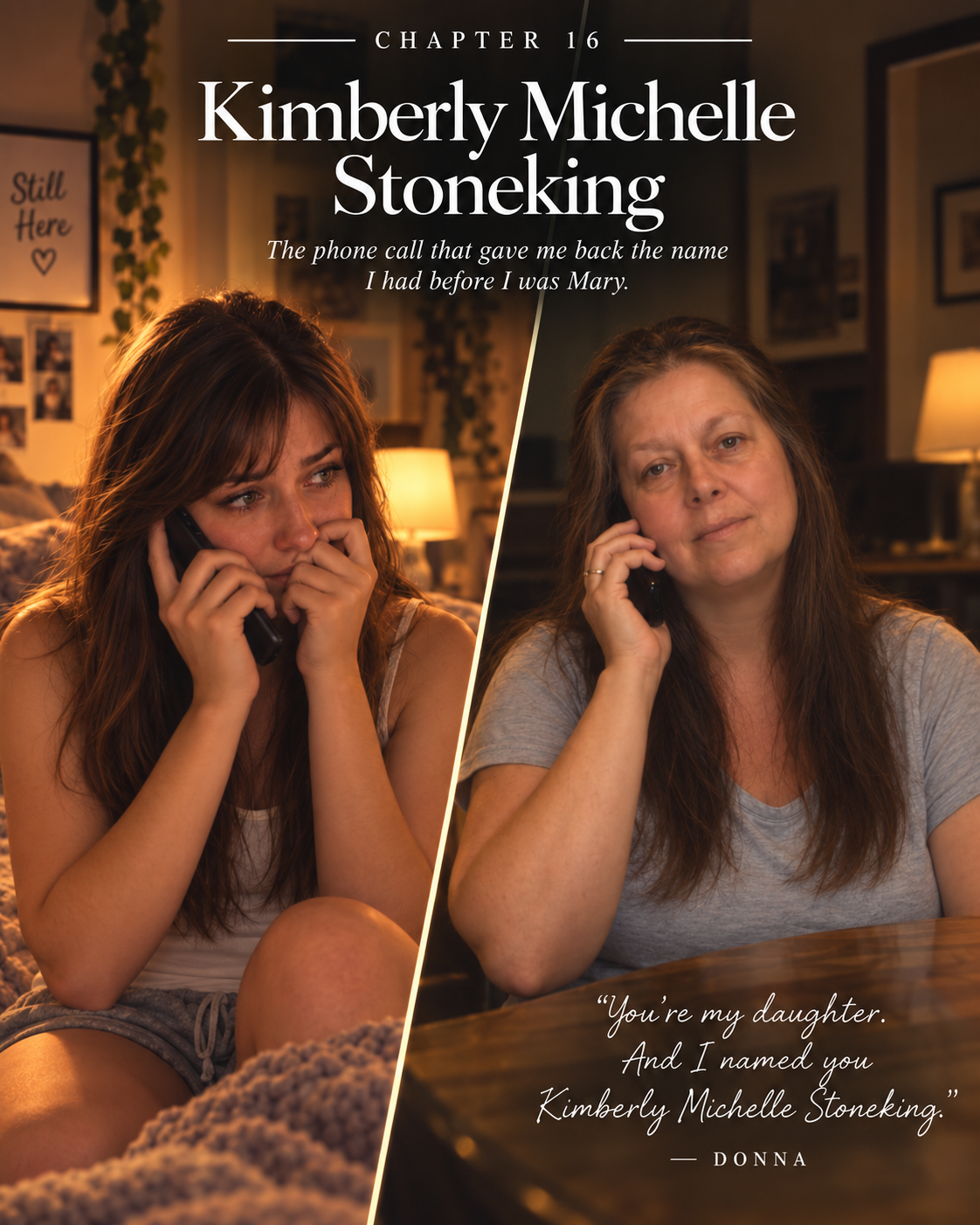
For me, writing usually starts long before I sit down to write.
It may start with a sentence somebody says that I cannot get out of my head. It might be a memory that suddenly connects to another memory. Sometimes it is a question that bothers me enough that I have to chase the answer.
That is what happened with Three Wishes. A question Pastor Jeff Williams asked stayed with me. I kept thinking about it, and eventually I realized the answer wasn't going to fit into a paragraph. There was a whole life behind it.
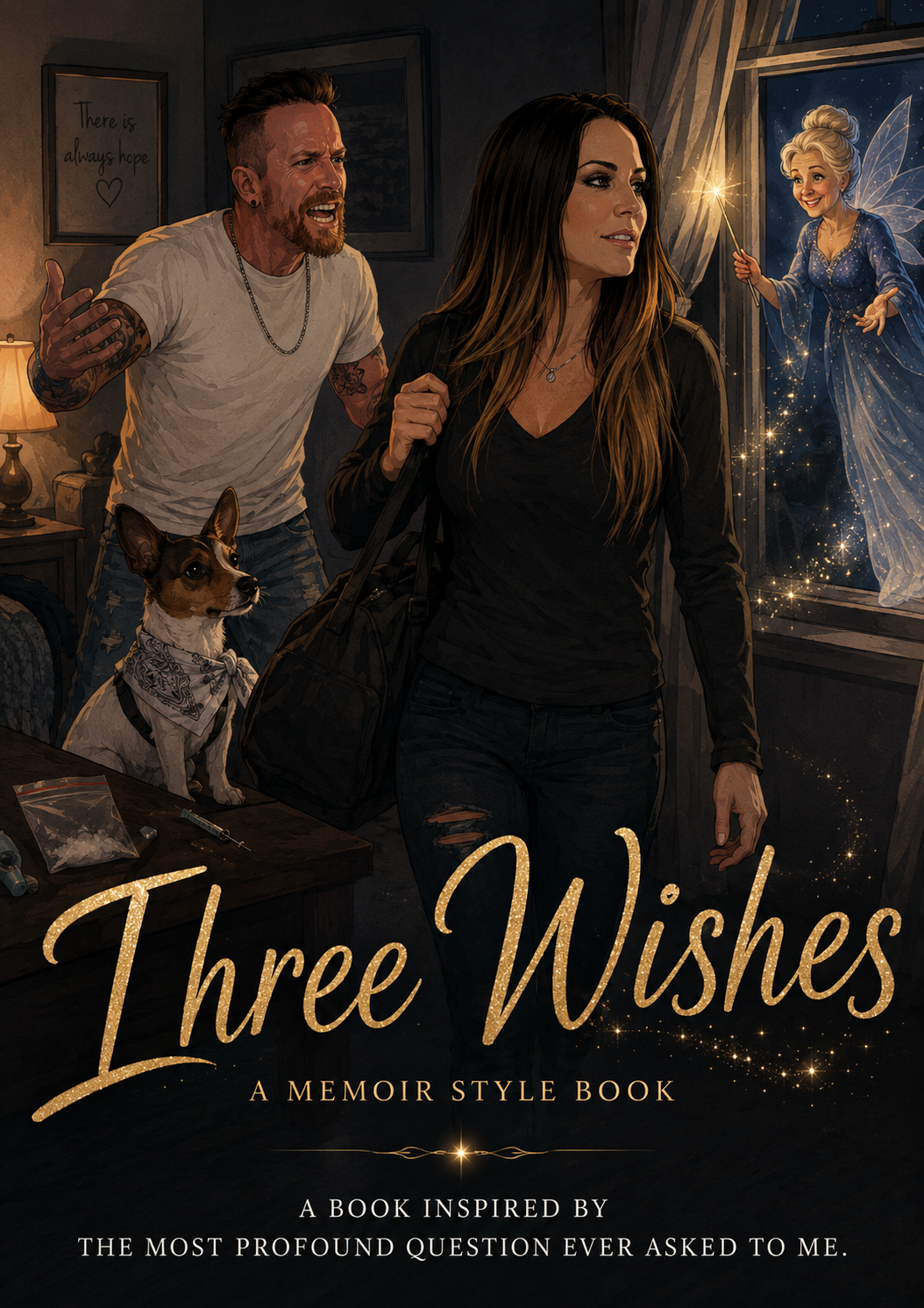
The part that looks nothing like writing is probably most of the process. I drive. I think. I remember. I talk things out. I go through old photographs. I ask family members questions. I change my mind about something I thought I understood twenty years ago.
Then I start putting pieces together.
I don't necessarily write in perfect chronological order. I tend to see scenes first. Once I understand why a scene matters, I can figure out where it belongs.
The finished draft comes much later. First I have to figure out what the story is actually trying to say.
Who changed the way Mary Monroe Toukan writes, and how did she find her own voice?
Mary Monroe Toukan says no other writer shaped her voice. Life did. She found it when she stopped trying to sound like a writer and kept the sentences that were too plain, too sarcastic, or too personal, the ones she had almost cut.
Strangely enough, I don't think another writer did that for me.
Life did.
The people I have loved changed the way I write. The things people said to me that I remembered twenty or thirty years later changed it. Family stories changed it. Loss changed it. Becoming a mother changed it. Getting older certainly changed it.
For a long time, I thought good writing had to sound like "a writer."
Eventually I realized the sentences that sounded most like me were usually the ones I almost edited out because they were too plain, too sarcastic, too personal or too conversational.
That became the voice.
I don't want somebody reading my work and thinking, "What an impressive sentence."
I'd rather they think, "I know exactly what she means."
If I can make somebody laugh on one page and stop for a minute on the next, I've probably written it the way I intended.
What was Mary Monroe Toukan actually trying to work out when she started writing this book?
Mary Monroe Toukan says she never decided her life was important enough to be a book. She decided the questions were, and the book became an effort to understand how one generation affects another and what she wants to pass forward.
I don't know that I ever decided my life was important enough to be a book.
I decided the questions were important enough.
Three Wishes began as me looking backward and trying to understand how one generation affects another. Once I started pulling on that thread, I realized how many people were connected to it.
Then the book stopped being simply about what happened to me.
It became about family.
It became about the things we inherit that don't show up on a family tree. The things one generation passes to another without meaning to. The things we repeat. The things we change.
And eventually it became about what I wanted to pass forward.
That's where the title Three Wishes really matters to me. After spending so much time examining the past, I started asking a different question: what do I want the people who come after me to carry with them?
That's a much more interesting question than simply telling people what happened.
What lessons took Mary Monroe Toukan the longest to learn, and did any of them end up on the page?
Mary Monroe Toukan says the longest lesson was that every story has more than one person in it, and that telling the truth is not the same as winning the argument, a distinction that sometimes meant rewriting an entire section.
Knowing that every story has more than one person in it.
Memoir would be easy if you were the only character.
You're not.
You're writing about people you loved, people who hurt you, people you hurt, people who aren't here anymore, people who remember the same day completely differently than you do.
I have had to learn the difference between telling the truth and trying to win the argument.
Those aren't the same thing.
There were chapters where I had to ask myself, "Am I writing this because the reader needs it, or because I still need somebody to agree with me?"
Sometimes the answer meant rewriting the entire section.
I don't want to make myself the hero of every chapter. I wasn't.
I don't want every person who disappointed me turned into the villain either.
People are more complicated than that.
I think the strongest parts of the book are the places where I finally stopped trying to make the past tidy.
What does Mary Monroe Toukan want to say that her book approaches but never quite states directly?
Mary Monroe Toukan says the message beneath the book is that a life does not have to be perfect to be meaningful, and that what matters most is what we do with the life still in front of us.
I hope they call somebody.
I hope they ask their mother a question while she is still here to answer it.
I hope they write down a family story everybody assumes they'll remember forever.
I hope somebody who has spent years angry about something becomes curious about it instead.
And I hope readers understand that a life doesn't have to be perfect to be meaningful.
That's probably one of the biggest things writing this book has taught me.
We spend so much time wishing we could edit our past as though a better past would automatically create a better person.
I'm not sure that's true.
I think the more important question is what we do with the life that's still in front of us.
Thank you so much for sharing your story with us, Mary!